October 03, 2026
Some breakfasts are about speed. The Cumbrian breakfast is about order. A proper plate leans on coarsely ground Cumberland sausage, dry-cured bacon, thick slices of black pudding and bread that has spent time in the same pan as everything else. None of it is complicated. The timing is what catches people out. Cook it in the wrong sequence and you end up with cold sausage, a rubbery egg and a kitchen full of smoke. Cook it in the right one and four people eat together, hot, from one stove.
Here is a working checklist: what to buy, what goes in the pan first, and how to bring the whole thing together without a juggling act.
What Belongs on the Plate
There is no official recipe, and every Cumbrian household will argue for its own extras. The core, though, is remarkably consistent.
- Cumberland sausage — the anchor. Coarse, peppery and sold in a coil or a long length rather than as short links.
- Dry-cured bacon — back bacon for lean, streaky for flavour. Dry-cured meat releases far less water, so it fries instead of steaming in its own liquid.
- Black pudding — cut thick, cooked until the outside crisps and the middle stays soft.
- Eggs — fried, with a yolk that still moves.
- Flat mushrooms and halved tomatoes — cooked cut-side down so they colour rather than collapse.
- Bread — fried bread, toast, or both. A thick white loaf or a decent sourdough holds up better than thin sliced.
- Extras, if you want them — potato cakes, beans, mustard or brown sauce, and a strong pot of tea.
Buy the Sausage First
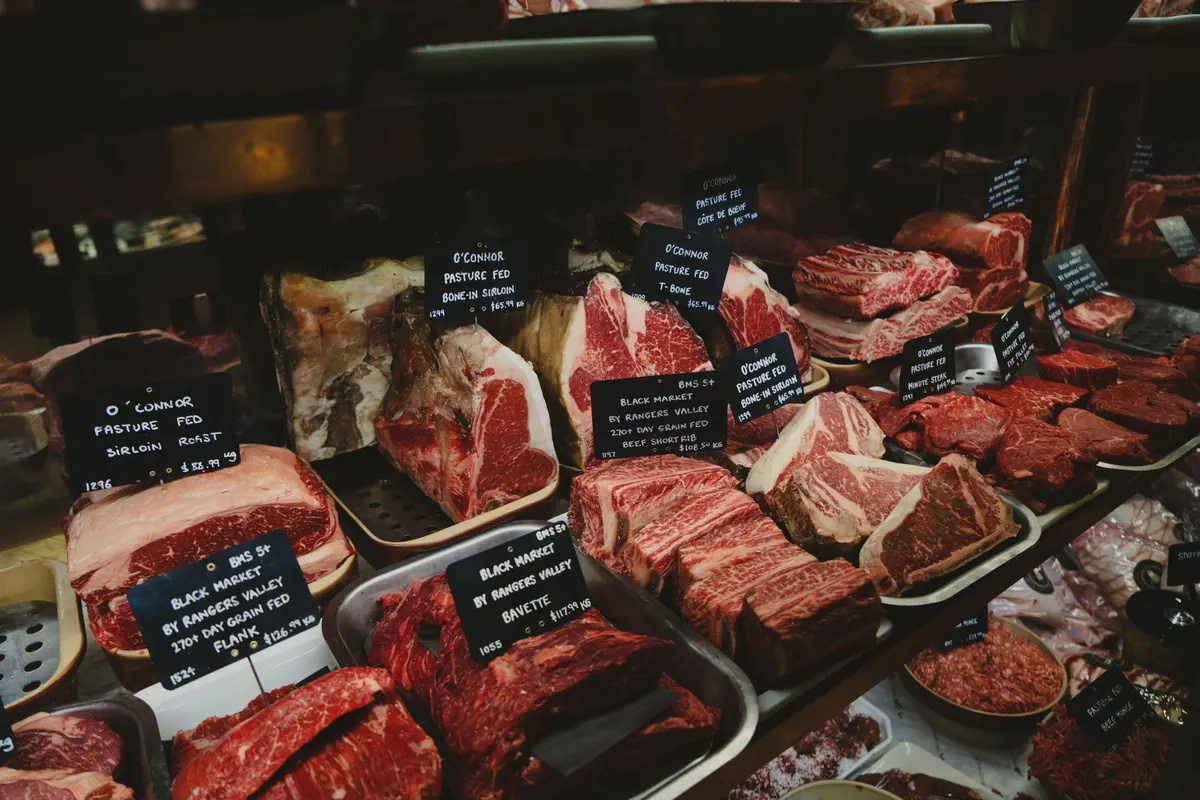
Everything else on the plate is forgiving. The sausage is not. A Cumberland sausage should be coarsely ground, with a high proportion of pork, seasoned with pepper and herbs and packed into a natural casing that is wide rather than narrow. If the meat looks like smooth paste, put it back. You want to see the grain.
Buy it as a coil and either cook it whole, turning it carefully, or snip the casing and cut it into long fingers. Coil or fingers, keep the pieces thick — a Cumberland sausage sliced thin dries out before it cooks through. Ask the butcher what breed the pork is and whether the seasoning is heavy on pepper. That single question will tell you more about the sausage than any label.
Bacon and Black Pudding: Two Small Decisions
Bacon is a thickness question. Supermarket rashers are usually cut so thin they toughen before they crisp. Ask for bacon cut around 4–5mm thick. It will take a minute longer and taste considerably better.
Black pudding divides people. Some want it soft and spoonable, others want the edges dark and brittle. Both are achievable with the same slice — it depends entirely on the heat. A hot pan and a short cook gives you a crisp shell with a soft centre. A moderate pan and a longer cook dries it out. Go hot, and don't walk away from it.
Where to shop
Butchers across the county make their own versions of all three: the market towns of Kendal, Penrith, Ulverston and Cockermouth are good places to start, and farm shops along the main valleys often stock local pork and black pudding alongside their own bread. Buy the sausage a day or two ahead if you can — it firms up in the fridge and holds its shape in the pan.
The Cooking Order, Step by Step
This is the part that matters. Work from the oven down to the pan, and from the longest cooking to the shortest.
- Turn the oven to its lowest setting and put a heatproof plate or tray inside. This is your holding bay. Everything cooked goes in there.
- Sausages first. Brown them in a little oil over a medium heat, turning every few minutes, for about 15–18 minutes until firm and deeply coloured. Or roast them at 200°C (180°C fan) for 20–25 minutes while you use the hob for everything else. Move them to the oven when done.
- Black pudding next, into the pan the sausages have just left. Two to three minutes a side. Keep the fat.
- Bacon after that, in the same pan, three to four minutes each side depending on thickness. Add it to the oven tray.
- Mushrooms and tomatoes, cut-side down, in the bacon fat. Four to five minutes. They can share the pan if there is room.
- Eggs last, in a clean pan or a wiped corner of the same one, two to three minutes, spooning hot fat over the whites if you like them set on top.
- Fried bread in the final two minutes, using whatever fat is left.
Bread and Eggs: The Last Five Minutes
Fried bread is the most underrated item on the plate and the easiest to ruin. Use bread at least a day old, or it will soak up fat and turn to mush. Press it into the pan, leave it alone until the underside is properly golden, then turn once. Two minutes a side is usually enough. Drain it briefly on kitchen paper so it stays crisp rather than greasy.
For the eggs, get the fat hot but not smoking. Crack them into a cup first so you can slide them in cleanly, season the whites rather than the yolks, and take them out while the centre still wobbles. Residual heat will carry them the rest of the way to the plate.
Plating Up and Keeping It Hot
Warm plates are not a nicety — they are the difference between a hot breakfast and a lukewarm one. If your plates don't fit in the oven, fill them with hot water while you cook and dry them just before serving.
Build the plate in the order things came off the heat. Sausage to one side, bacon and black pudding across the middle, egg on top of the bread so the yolk soaks in, mushrooms and tomato at the edge. Give everything a little space; a crowded plate cools fast and looks like a pile rather than a breakfast.
The Checklist Before You Start
Read the whole sequence once before you turn anything on. Get the oven warming, the plates in, the kettle filled and everything you need laid out on the counter. Coarse Cumberland sausage, thick-cut dry-cured bacon, black pudding cut generously, eggs at room temperature, bread a day old, and a clean pan for the eggs.
Then cook slowly and in order, and don't try to rush the sausage. If you are feeding a crowd, cook the meat in batches and hold it in the low oven; it will keep happily for ten minutes while you finish the eggs and bread. Serve as soon as the last egg lands, with mustard, brown sauce and a mug of tea within reach.
Photo: cp17 / Pixabay