November 23, 2026

The myth dies hard. Every few months a player walks into an online casino chat with the same confident grin, asking whether counting cards on live dealer blackjack is "still possible" because the game is streamed from a real table. The answer, unfortunately for that player, is almost always the same: no, and it never really was. But the reasons are more interesting than a simple dismissal, and understanding them will make you a sharper blackjack player—whether you're chasing an edge or just trying to lose less.
The Dealer Actually Shuffles More Than You Think
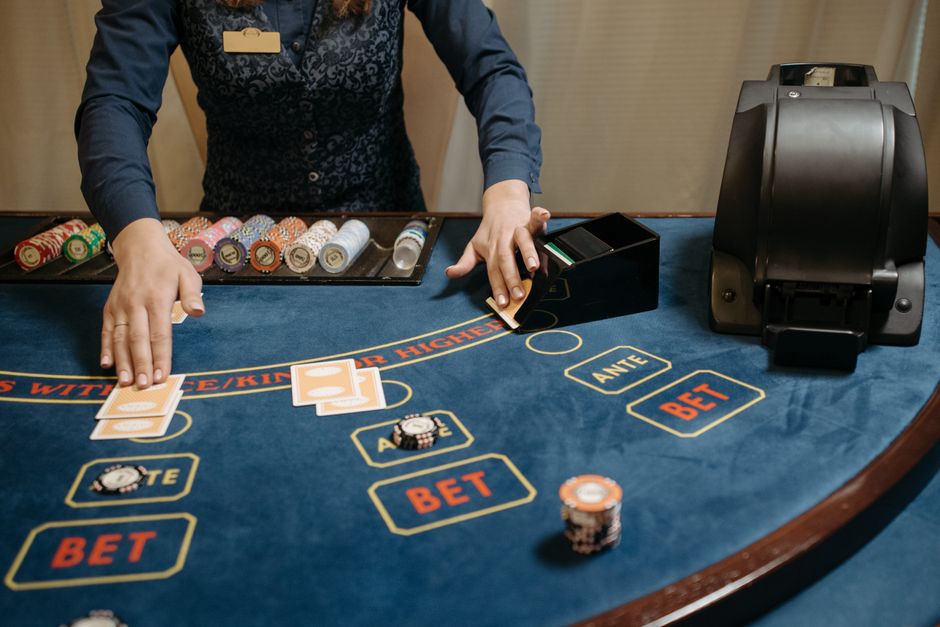
The classic card counting fantasy depends on penetration—how deep into the shoe the dealer goes before reshuffling. Land-based counters stalk tables with 75–85% penetration and flat-bet until the true count is favourable. Live dealer blackjack studios invert that advantage almost completely.
Streamed tables typically run with what's called a low-penetration shoe or a continuous shuffling machine (CSM). You'll often see six or eight decks loaded, with the cut card placed early—sometimes after 50–60% of the shoe—or the lobby will openly advertise "CSM" tables. A machine that recycles every discards pack instantly wipes out the entire premise of counting: there is no running count that persists, no meaningful true count, and no window where the composition shifts in your favour. If penetration sits at 50%, a Hi-Lo counter needs an enormous true count just to overcome the house edge, and those spots show up too rarely to matter.
Check the table info panel before you sit down. Reputable live studios list deck count, shuffle type and sometimes penetration. If it says CSM, counting is mathematically dead, full stop. For a closer look, เว็บสล็อต has helpful details.
You're Watching, But Someone Is Watching You
Here's the thing players forget: a live dealer table is a surveillance product as much as a game. The studio has cameras on the cards, the dealer and the players' bet spots. Software tracks every wager with perfect precision—no floor supervisor with a clipboard needed.
Card counting isn't illegal, but it violates almost every casino's terms of service, and online operators enforce it with algorithms, not burly security guards. Systems flag accounts that:
- Raise bets dramatically when the count is hot (detectable because the platform already knows the exact shoe composition in real time)
- Flat-bet then suddenly scale up in patterns correlated with remaining-card composition
- Use known counting spread patterns (1–4, 1–8, 1–12 units) that match published systems
- Switch tables abruptly when penetration looks poor
The response isn't dramatic. Usually it's a politely worded email, a stake restriction, or a bonus ban—possibly a soft ban on that table type. There are no handcuffs online, but there's also no money.
The Math Was Always Tighter Than YouTube Suggests
Even in a perfect scenario, counting earns somewhere between 0.5% and 1.5% of your total wagered handle, and only if you play near-perfect basic strategy with no errors. Throw in:
- Deck composition you can't verify in real time. Streamed video has latency—typically 2–5 seconds. By the time you see the card, other players have acted and bets may already be locked.
- Betting limits that cap your spread. Most live tables cap max bets low enough (often €500–€2,000) that a high-roller spread is impossible without raising suspicion.
- Several players at the table. You don't control how many hands are dealt or when; the count you're tracking is diluted by strangers' decisions.
Add a sliver of human error and the house edge frequently creeps back. Counting survives in land-based casinos because the floor is noisy, mistakes go unnoticed, and the shoe penetration is rich. Online, the platform watches every decimal point.
What Actually Works Online
If you want a genuine mathematical edge over live dealer blackjack—not just bragging rights—focus on the levers that are actually within reach:
- Perfect basic strategy. The single biggest return on effort. A single incorrect play per hour can erase the tiny edge a counting system theoretically offers. Use a strategy chart and test yourself before wagering real money.
- Table rules that favour you. Look for 3:2 blackjack payouts (not 6:5), dealer stands on soft 17, double after split allowed, and late surrender. A 6:5 table adds roughly 1.4% to the house edge—a bigger swing than any realistic counting edge.
- Bonus and cashback exploitation. Live dealer welcome offers with low wagering requirements, weekly cashback, and tournament leaderboards are the closest thing to a lawful edge in online blackjack.
- Free bet blackjack variants and side-bet discipline. Skip side bets—they carry 2–7% house edges and will eat any modest advantage you build.
The One Thing Counters Get Right
Counting does teach something valuable: bet sizing relative to expected value. That principle survives even when the counting itself doesn't. If you understand that your stake should shrink when the game is unfavourable, you'll play longer, lose less, and enjoy the table far more than the guy memorising Hi-Lo to beat a CSM.
Treat the live studio as a genuine game of skill with a small house edge, and it rewards you with engaging play at a fair price. Treat it as a money printer and it will quietly close the door.
The Conclusion Most Players Never Read
Card counting on live dealer blackjack isn't a secret that's been hidden from you—it's a tactic that's structurally incompatible with how modern streamed tables are built. The continuous shuffle, the low penetration, the real-time algorithmic surveillance and the capped bet spreads combine to make the strategy unprofitable and unworkable, regardless of how many decks you can count in your head. That's not bad news. It's a licence to stop obsessing over systems and start focusing on what actually moves the needle: flawless basic strategy, favourable table rules, and disciplined bankroll management. The players who understand those matters outperform the would-be counters every single session—and they don't need a notepad to do it.